
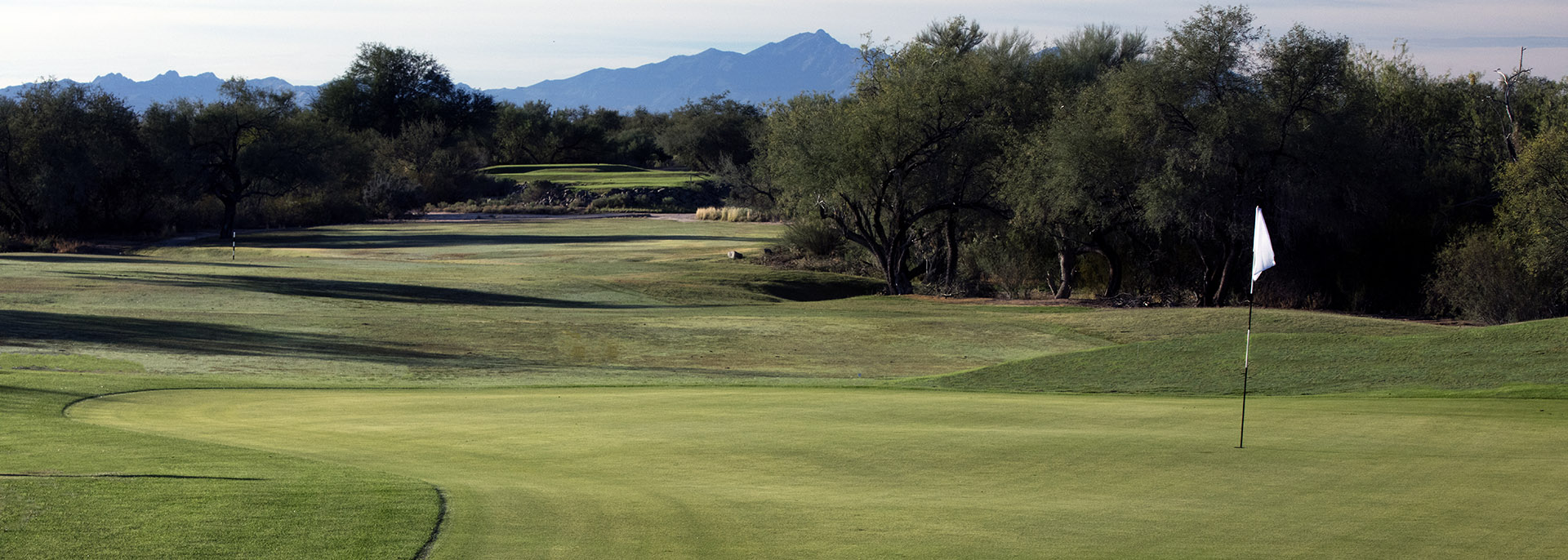
The Summer Turf Transition at Tucson City Golf
As Tucson’s temperatures rise, you might be noticing the summer turf transition taking shape across our Tucson City Golf courses. Once Tucson hits those 100‑plus days, ryegrass fades quickly, allowing the bermudagrass below to emerge. Let’s take a closer look at why this transition happens every year, and how it brings back the strong, vibrant bermudagrass that carries the course through the hottest stretch of the season.
What Golfers Are Seeing on the Course
As a golfer, it’s easy to notice when the course looks different, especially when brown or straw-colored patches start showing up in fairways and surrounds. Our golf course agronomy team closely monitors these areas, and what you’re seeing is a normal part of the summer transition. These visual changes can feel surprising, but they’re actually signs that the bermudagrass underneath is beginning to take over.
“The areas that are slower to come back during transition are areas we struggled with before we put seed down. We try to slowly eliminate the ryegrass to reduce the sudden appearance of distressed turf. Not all transitions are the same, and we do our best to remedy the areas,” said our Director of Agronomy, Tucson City Golf.
It’s normal to see any of the following conditions during this stage of transition:
- Brown or straw-colored patches
- Thin or weak areas in fairways and surrounds
- Texture changes as ryegrass declines
- Slight firmness or dryness in certain spots
How Rising Temperatures Affect the Turf
The turf responds quickly when Tucson’s temperatures push past 100 degrees, and humidity begins to rise. Imagine your car’s dashboard heating the second you park in the sun; it reacts immediately. The same thing happens on the course: the soil heats, ryegrass begins to lose strength, and the bermudagrass underneath wakes up and starts pushing through. These changes happen fast in our climate, showing how quickly the turf shifts once summer heat takes over.
Why The Summer Turf Transition Happens
The summer turf transition isn’t just a visual change; it’s a biological shift happening beneath your feet. As ryegrass softens in the summer heat, it’s easy to assume the bermudagrass underneath should immediately bounce back. The better the bermudagrass base before overseed, the easier it is for the bermudagrass to come back with proper practices.
What Causes Bermudagrass Weakness?
Bermudagrass weakness occurs when winter ryegrass grows thick enough to limit the bermuda’s access to sunlight. During fall overseed, ryegrass often outcompetes the dormant bermuda beneath it, especially in high-traffic areas.
By the time summer arrives, those shaded or crowded spots can lag behind as the rye fades. Picture the bermuda trying to wake up under a heavy blanket. It’s there, but it can’t fully push through until that layer starts to lift.
As the season shifts, bermudagrass can start from a weaker position. This is especially true in areas with heavy foot and cart traffic. As the rye fades, bermudagrass recovery begins, filling in those thin spots and rebuilding strength for the rest of the season.
What Our Agronomy Team Is Doing Right Now
As the summer transition unfolds, our golf course agronomy team is actively guiding the turf through this phase. Even though the transition happens fast, the maintenance behind the scenes is steady, intentional, and designed to support long-term recovery, which includes:
- Verticutting to thin out declining ryegrass and open space for bermudagrass
- Chemical applications to slow ryegrass growth and support smoother transition
- Targeted fertilizer applications to boost bermudagrass growth and color
- Irrigation adjustments to balance moisture with rising heat stress
- Monitoring weak areas to track recovery and address slow-filling spots
When Will Conditions Improve?
As temperatures begin to level out later this month, the bermudagrass gains the stability it needs to strengthen and spread. On average, it takes about 4–6 weeks to fully recover. During that window, you’ll see thin areas begin to fill in, color even out, and overall texture become more consistent across fairways and surrounds.
We focus on playability every day as the turf moves through recovery. Our golf course agronomy team actively shapes conditions, so Tucson City golfers can enjoy their round while the bermuda rebuilds. As temperatures stabilize, most courses begin showing noticeable improvement deeper into July, with steady progress continuing into early August as bermudagrass reaches full momentum.
What Golfers Should Know
As a golfer, you can be assured that the visual changes on the course don’t reflect poor conditions. This summer transition is a routine part of the turf growth cycle, and our agronomy teams are actively managing each step to support recovery. As temperatures climb into triple digits, the ryegrass that carried the course through winter begins to decline, opening the door for warm‑season bermudagrass to take over.
While bermudagrass strengthens, you may notice small shifts in color or texture, but playability remains our top priority. These improvements set the foundation for stronger conditions heading into fall.
Final Thoughts from Our Agronomy Team
This normal process might look a little different from week to week, but it’s all part of bermudagrass recovery and how the turf rebuilds its strength for the months ahead. Our team is watching every phase closely and making adjustments to keep the course moving in the right direction.
Want to follow along as the turf strengthens? Check our Club News page for regular updates from our agronomy team, course‑by‑course notes, and everything you need to know heading into fall overseed.